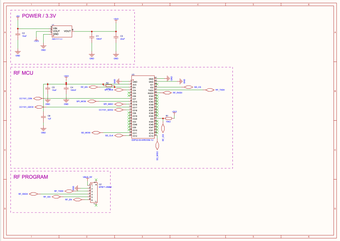
easyeda-agent connects AI agents to EasyEDA Pro for PCB automation
easyeda-agent, from Zhoushoujianwork, is an MCP-based automation connector that gives AI hosts programmatic control inside EasyEDA Pro for circuit and PCB editing. The agent implements a Model Context Protocol server to translate model actions into editor commands, enabling component placement, routing, design rule checks, and BOM export through the EasyEDA extension API. Key functions include typed schematic actions, PCB layout automation, LCSC component search, and real-time DRC reporting. It targets hardware engineers and hobbyists who want natural-language driven design edits inside their editor.
What tasks can you actually use it for?
The agent implements a Model Context Protocol server that maps the EasyEDA extension API into structured, observable commands so MCP hosts can perform live edits on schematics and PCBs. That translation lets an AI run typed schematic actions and layout operations inside the editor instead of producing static exports. In practice the bridge enables multi-step workflows such as component placement, routing sequences, copper pouring, and net labeling executed as in-session edits.
How reliable are its edits for engineering workflows?
Edits created by the agent appear as native EasyEDA objects, which preserves hand-editability and downstream refinement. The agent integrates real-time Design Rule Check reporting so violations surface during automation rather than after export. It also can produce BOM and netlist exports that feed procurement tools. These outputs make automated sequences actionable, but engineering-standard validation and human review remain necessary before committing boards to fabrication.
Is setup and integration practical for a hardware team?
Deployment requires EasyEDA Pro (desktop or web), a local Node.js or Go daemon, and an MCP-compliant host such as Claude Desktop. Typical installation uses a provided shell script and adding the 'EDA Agent Connector' extension from the plugin market; the editor must have its external-interaction setting enabled. The agent is open-source and extensible, which lets teams add custom skills or link the bridge to existing tooling.
What control and privacy trade-offs should teams consider?
The architecture centers on a local daemon for secure, low-latency communication with the editor, placing the command path on the operator's machine rather than an external gateway. That design gives teams direct control over the agent-host link and makes audit and customization straightforward through the open-source codebase. Organizations that require strict control of design assets gain an on-premise control point from this setup.
Best suited to supervised teams that accept a local integration step
easyeda-agent is a practical option for hardware engineers who need AI-driven, in-editor automation while keeping designs editable. The local daemon and MCP bridge make it suited to teams willing to run an MCP host and supervise edits; automated changes should be validated with DRC and manual review before fabrication. Use the agent as an assistant to accelerate layout iterations, not as a replacement for engineering sign-off.